ArticlesAttendance7 min read
Sindh is putting QR attendance in 3,647 government schools. What a private school should take from it.
A government programme has quietly made QR attendance normal in Pakistan. Private schools are now the ones explaining why they still use a register.
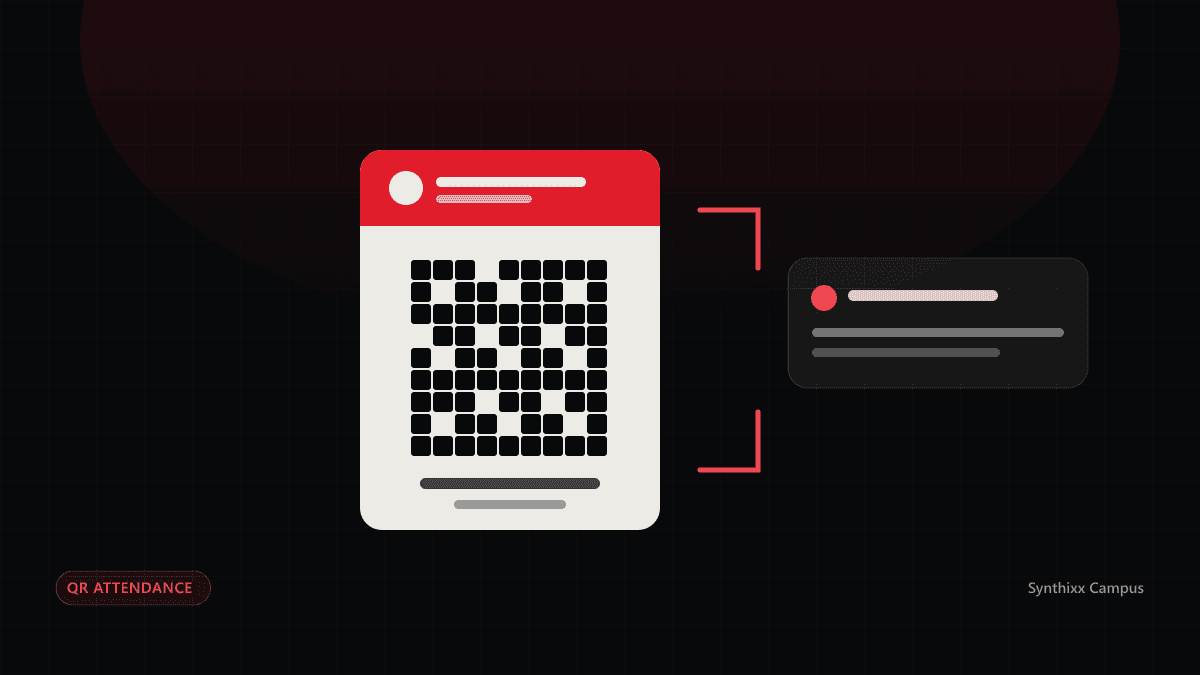
Something quietly significant happened to Pakistani schools this year, and most private schools have not noticed it yet. The Sindh School Education and Literacy Department has been rolling out a digital attendance programme called SAMRS — the Student Attendance Monitoring and Redress System. Every child gets a student ID and a QR code. Attendance is recorded against that code. When a child stops coming for an extended period, the system raises it and the family is contacted.
By the end of August the department reported the system reaching 3,647 government schools, with 3,481 already linked, and the stated target is every government school in Sindh by April 2027. The cabinet approved the policy in March 2026, and UNICEF has supported the work.
What the system actually does
Three things, and it is worth separating them, because schools tend to buy the first and forget the other two.
- It identifies the child reliably. Students are linked to their NADRA-verified B-Form number, so the same child is not entered twice under two spellings — the single most common reason a school’s own numbers never add up.
- It records presence as an event, not a summary. A scan has a time attached. A register tick does not.
- It escalates a pattern. The design is aimed at the child who drifts away over weeks, not the child who missed Tuesday. That is a different and much more useful thing to detect.
Why parents care about this more than principals expect
Ask a school owner what attendance software is for and they will say reporting. Ask a parent in Karachi and they will describe a morning: the child left at seven, the van belongs to somebody else, the road was blocked, and there is no way of knowing whether a boy who left Korangi reached Gulshan. A register filled in at the end of the day answers that question nine hours late.
That gap — between the child leaving and the parent knowing they arrived — is the whole product, and it is why a government programme aimed at dropout prevention ends up being judged by parents on something else entirely.
What a private school should take from it
One identity per child, fixed early
SAMRS leans on the B-Form number because a name is not an identifier. “Muhammad Ibrahim”, “M. Ibrahim” and “Ibrahim Siddiqui” are three rows and one boy, and that is how a school ends up with a fee register that disagrees with its own attendance. Whatever system you use, decide now what the single identifier is and make every list use it.
A card, not a device
A QR card is printed, replaceable for the cost of paper, and readable by any phone. A biometric reader is hardware at every gate, has a bad day with small or damp hands, and means a school is storing a child’s fingerprint — a thing worth thinking about twice before you take it on.
Tell somebody, or do not bother
Attendance that only produces a monthly report has not changed anything; it has digitised a book. The value appears at the moment the information reaches the parent. If a system cannot do that within minutes, it is a reporting tool with a scanner attached.
Watch the pattern, not the day
The child who misses one Thursday is noise. The child who was at eighty per cent in September and is at fifty in November is a child the school is about to lose. SAMRS is built around the second case, and a private school should be too.
Doing it without a government budget
None of this needs a provincial programme behind it. In Synthixx Campus a school prints QR cards for its students from the records it already has, scans them at the gate on an ordinary phone or marks a class by hand, and the parent is told within seconds — in their own portal and on their phone, with no SMS credits to buy. Staff attendance works the same way. The monthly report still comes out at the end, but by then it is a summary of something the school already acted on.
If you want to see it before deciding anything, the live demo opens a school that already has ten days of attendance in it, with no account and no card.
Sources
Questions
What is SAMRS?
The Student Attendance Monitoring and Redress System, a programme of the School Education and Literacy Department in Sindh. Each child is given a student ID and a QR code, attendance is recorded against it, and prolonged absence raises an alert to the family. The Sindh cabinet approved the policy in March 2026.
How many schools use it?
The department reported the system reaching 3,647 government schools, with 3,481 linked as of 27 August, and has said it intends to cover every government school in Sindh by April 2027.
Does a private school have to use SAMRS?
No. It is a government programme for government schools. What has changed for private schools is the expectation: a parent whose nephew is scanned in at a government school will ask why their own fee-paying school still writes names in a book.
Is a QR card the same as biometrics?
No, and for a school the difference matters. A QR card is printed, costs almost nothing to replace and needs no special hardware — any phone camera reads it. A fingerprint reader is a device per gate, fails on small or damp hands, and raises questions about storing a child's biometric data.
What if a child forgets the card?
The register does not disappear. A teacher can mark the class by hand in the same screen, and the child's day is recorded exactly as if they had scanned.
Can a private school send absence alerts too?
Yes. Synthixx Campus marks attendance in class or at the gate and notifies the parent within seconds, in their portal and on their phone, without SMS credits.